three little pigs story with pictures pdf
The Three Little Pigs Story with Pictures PDF: A Comprehensive Guide
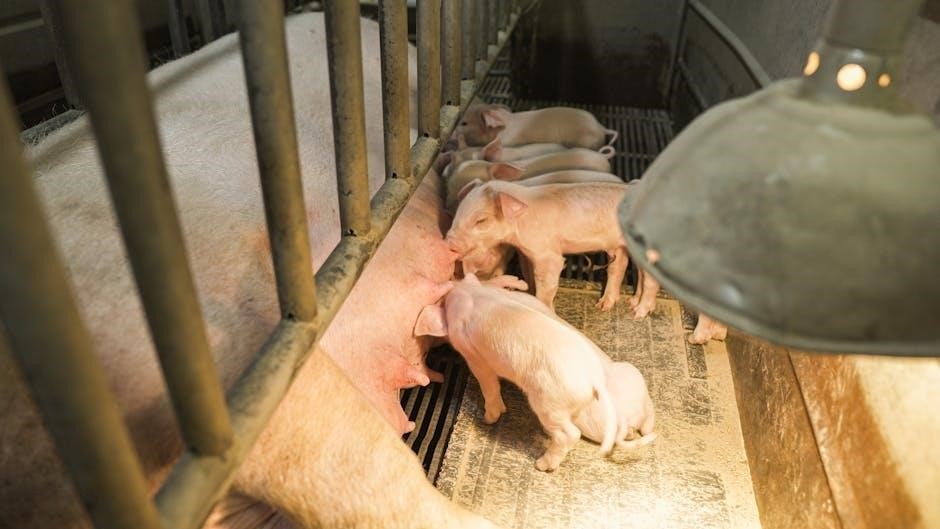
Numerous PDF versions of the beloved “Three Little Pigs” story, complete with vibrant pictures, are readily available online for educational purposes and enjoyment.
These digital books cater to various reading levels, offering simplified text for beginners and more detailed narratives for confident readers.
Parents and educators can easily download and print these resources, fostering a love for reading and classic folktales in children.
Origins and History of the Tale
Tracing the origins of “The Three Little Pigs” reveals a rich history steeped in folklore and oral tradition. While the exact genesis remains elusive, variations of the story have circulated for centuries, predating its widespread publication in the 19th century. Scholars believe the tale’s roots lie in the broader European folktale tradition, with connections to similar narratives emphasizing the importance of hard work and preparedness.
Early versions often served as cautionary tales, imparting practical lessons about building sturdy homes and avoiding laziness. The symbolic representation of the wolf as a predatory threat likely reflects historical anxieties surrounding wild animals and the vulnerability of rural communities. Interestingly, the story wasn’t initially focused on pigs; other animals, like lambs or goats, sometimes took their place in earlier iterations.
The widespread dissemination of the tale was significantly boosted by its inclusion in collections of fairy tales, such as those compiled by the Brothers Grimm and Joseph Jacobs. These publications standardized the narrative, solidifying the now-familiar characters and plot points. The emergence of illustrated editions, and later, “Three Little Pigs” story with pictures in PDF format, further cemented its place in children’s literature, ensuring its continued relevance for generations to come.
Variations Across Cultures
While universally recognized, “The Three Little Pigs” isn’t monolithic; fascinating variations exist across different cultures, reflecting unique societal values and environmental contexts. In some regions, the building materials differ – stone or adobe replacing straw and sticks, adapting to local resources. The wolf’s characterization also shifts; sometimes portrayed as cunning, other times as simply hungry and desperate.
Notably, some versions emphasize the pigs’ resourcefulness in outsmarting the wolf, rather than solely relying on the strength of their homes. Indigenous storytelling traditions often incorporate animal trickster figures, influencing the wolf’s portrayal. The moral of the story can also subtly change, focusing on community cooperation or the importance of cleverness alongside diligence.
Even within Europe, regional adaptations abound. The availability of “Three Little Pigs” story with pictures in PDF format has ironically contributed to both standardization and the preservation of these diverse versions, allowing global audiences to compare and contrast the tale’s cultural nuances. These variations demonstrate the story’s adaptability and enduring appeal, proving its ability to resonate across linguistic and geographical boundaries.
The Core Narrative: A Summary
The story centers around three little pigs venturing out to build their own homes after their mother deems them old enough to seek their fortunes. Each pig chooses a different building material: the first, straw – quick but flimsy; the second, sticks – a compromise between speed and strength; and the third, bricks – laborious but robust.
Soon, a “big bad wolf” appears, intent on devouring the pigs. He easily blows down the straw and stick houses, forcing those pigs to flee to their brother’s brick house. Despite repeated attempts – blowing, climbing, and even trying to enter through the chimney – the wolf fails to breach the brick structure.
Ultimately, the resourceful pig outsmarts the wolf, often depicted as boiling water in the chimney, causing the wolf to fall and be defeated. PDF versions of “The Three Little Pigs” faithfully reproduce this narrative, often enhanced with colorful illustrations that bring the story to life for young readers. The tale consistently emphasizes the value of hard work and planning.
Character Analysis: The Three Pigs
The three little pigs represent distinct approaches to life and work. The first pig embodies laziness and a desire for immediate gratification, prioritizing speed over durability in building his straw house. He’s impulsive and lacks foresight, leading to his vulnerability.
The second pig demonstrates a degree of compromise. He seeks a middle ground, opting for sticks – stronger than straw, but still susceptible to the wolf’s force. He represents a willingness to work somewhat, but not fully commit to long-term security.
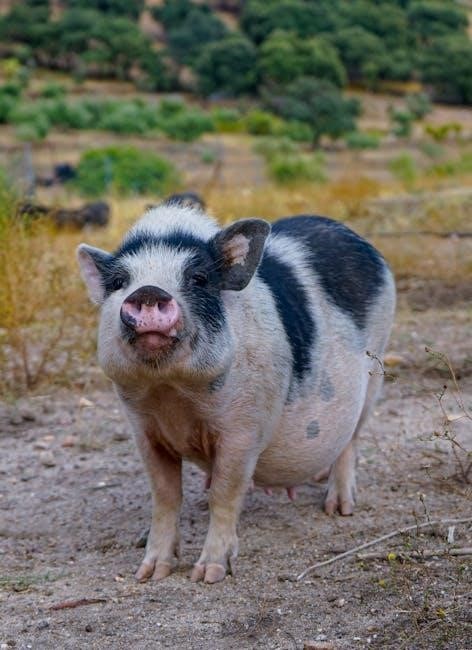
The third pig is the embodiment of diligence, patience, and foresight. He invests significant effort in constructing a sturdy brick house, understanding the importance of a solid foundation. PDF versions often visually highlight these differences, portraying the third pig as determined and resourceful. He serves as the hero, showcasing the rewards of hard work and careful planning, ultimately ensuring his and his brothers’ survival.
Character Analysis: The Big Bad Wolf
The Big Bad Wolf is traditionally portrayed as a menacing antagonist, driven by hunger and a predatory nature. He represents a force of chaos and danger, testing the pigs’ preparedness and resilience. PDF illustrations frequently emphasize his fearsome appearance – sharp teeth, glaring eyes, and a generally intimidating presence.
However, some interpretations suggest the wolf embodies more than just brute force. He can be seen as a symbol of external threats and challenges that life inevitably presents. His repeated attempts to enter the houses highlight his persistence and determination, albeit with malicious intent.
The wolf’s ultimate failure to breach the brick house underscores the importance of preparedness and strong foundations. Many “Three Little Pigs” PDF versions use the wolf’s defeat to reinforce the moral of the story, demonstrating that hard work and diligence can overcome adversity. He serves as a cautionary figure, highlighting the consequences of laziness and poor planning.
Building Materials and Symbolism
The choice of building materials – straw, sticks, and bricks – is central to the story’s symbolism, frequently depicted in “Three Little Pigs” PDF illustrations. Straw represents haste and a lack of effort, signifying a superficial approach to life and security. PDF versions often visually contrast the flimsy straw house with the more substantial structures.
Sticks embody a compromise between effort and laziness, suggesting a willingness to work but without complete dedication. They offer a moderate level of protection, but ultimately prove insufficient against the wolf’s persistence. PDF formats highlight the vulnerability of the stick house through imagery.
Bricks symbolize diligence, foresight, and hard work. The brick house, consistently portrayed as strong and secure in PDF versions, represents the rewards of careful planning and sustained effort. It’s a visual testament to the value of perseverance, offering a safe haven against external threats and embodying lasting stability.
Straw House: Representing Laziness
The straw house, prominently featured in “Three Little Pigs” story PDFs, serves as a potent symbol of laziness and a short-sighted approach to life. Its construction, often depicted with minimal effort in illustrations, highlights the first pig’s desire for immediate gratification over long-term security.
PDF versions visually emphasize the fragility of the straw house, showcasing its quick collapse under the wolf’s minimal force. This reinforces the idea that shortcuts and a lack of dedication lead to vulnerability and ultimately, failure. The ease of building is directly correlated with the ease of destruction.
Many PDF adaptations use the straw house as a cautionary tale, demonstrating the consequences of prioritizing play over responsibility. The pig’s choice is presented as a clear example of poor decision-making, setting the stage for the story’s central moral lesson about the importance of hard work and preparation.
Stick House: Representing Compromise
The stick house, frequently illustrated in “Three Little Pigs” story PDFs, embodies the concept of compromise – a middle ground between complete laziness and diligent effort. While requiring more work than the straw house, its construction still lacks the substantial commitment of the brick house.
PDF versions often depict the second pig expending some effort, but ultimately settling for a quicker, less secure option. The stick house offers a degree of protection, demonstrated by the wolf’s slightly increased struggle to dismantle it, signifying a partial success.
This house symbolizes a willingness to put in some work, but not enough to ensure true safety. Many PDF adaptations use it to illustrate the dangers of half-measures and the importance of fully investing in one’s endeavors. It’s a visual representation of a moderate approach with moderate results, ultimately proving insufficient against adversity.
Brick House: Representing Diligence and Foresight
The brick house, prominently featured in countless “Three Little Pigs” story PDFs, stands as a powerful symbol of diligence, foresight, and the rewards of hard work. Unlike his brothers, the third pig invests significant time and effort into constructing a robust and secure dwelling.
PDF illustrations consistently showcase the pig meticulously laying each brick, highlighting the dedication required for lasting protection. This house withstands the wolf’s relentless attempts at destruction, demonstrating the effectiveness of careful planning and persistent effort.
Many PDF versions emphasize the brick house as a lesson in long-term thinking. It’s not merely about building a shelter, but about building it right. The story, through its visual depictions in PDF format, teaches children that prioritizing quality and investing time upfront yields the greatest security and peace of mind, ultimately ensuring survival.
Moral Lessons and Themes
The “Three Little Pigs” story, widely available in “pictures PDF” format, imparts several crucial moral lessons to young readers. Primarily, it emphasizes the importance of hard work and diligence, contrasting the swift but flimsy structures of straw and sticks with the enduring strength of brick.
PDF versions often visually reinforce the consequences of laziness and impulsivity, showing the first two pigs’ carefree approach leading to vulnerability. The narrative, as presented in these illustrated PDFs, also highlights the value of foresight and planning – anticipating potential dangers and preparing accordingly.
Furthermore, the story subtly touches upon themes of resourcefulness and perseverance. The third pig’s success isn’t just about building a strong house; it’s about refusing to give up in the face of adversity. PDF adaptations frequently underscore these themes, making the story a valuable tool for character development and instilling positive values in children.
Educational Value for Children
“Three Little Pigs” storybooks in “pictures PDF” format offer significant educational benefits for children. Beyond fostering a love for reading, these resources aid in language development, introducing new vocabulary and sentence structures in a captivating context.
Visually engaging PDF versions enhance comprehension, particularly for younger learners, as illustrations clarify the narrative and reinforce understanding. The story also provides opportunities to discuss problem-solving skills – analyzing the pigs’ choices and their outcomes.
Moreover, the tale subtly introduces concepts of structural engineering and material science, prompting children to consider the properties of different building materials. Printable PDF activities, often accompanying the story, can further reinforce these concepts through coloring pages and simple exercises. These resources support early literacy, critical thinking, and a foundational understanding of basic principles.
Finding “Three Little Pigs” Story with Pictures in PDF Format
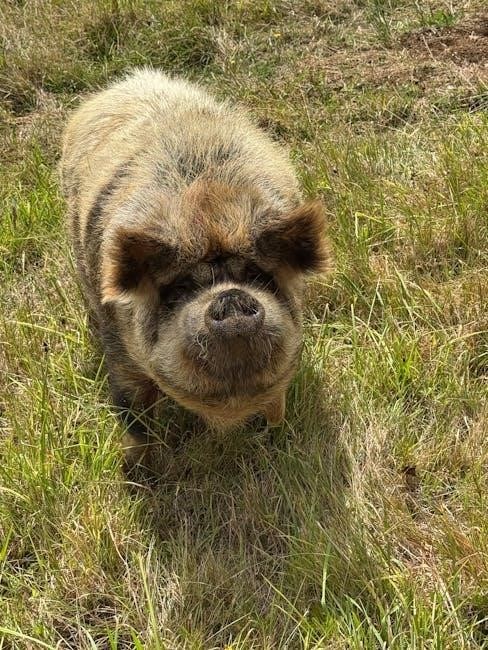
Locating “Three Little Pigs” storybooks with pictures in PDF format is remarkably easy thanks to the vast resources available online. Numerous websites specialize in free children’s ebooks, offering a diverse selection of versions tailored to different age groups and reading levels.
A simple web search using keywords like “Three Little Pigs PDF,” “printable Three Little Pigs story,” or “Three Little Pigs story with pictures free download” yields a wealth of results. Websites like Storynory, Free Children’s Stories, and many educational resource platforms frequently host these PDF files.
Additionally, online libraries and digital bookstores often provide downloadable PDF versions, sometimes for a small fee. Always ensure the source is reputable to guarantee a safe and age-appropriate reading experience. Many sites also offer interactive PDFs with added features.
Popular PDF Versions and Sources
Several PDF versions of “The Three Little Pigs” consistently rank as popular choices for parents and educators. One frequently downloaded version is a beautifully illustrated adaptation designed for early readers, featuring simple sentences and vibrant imagery.
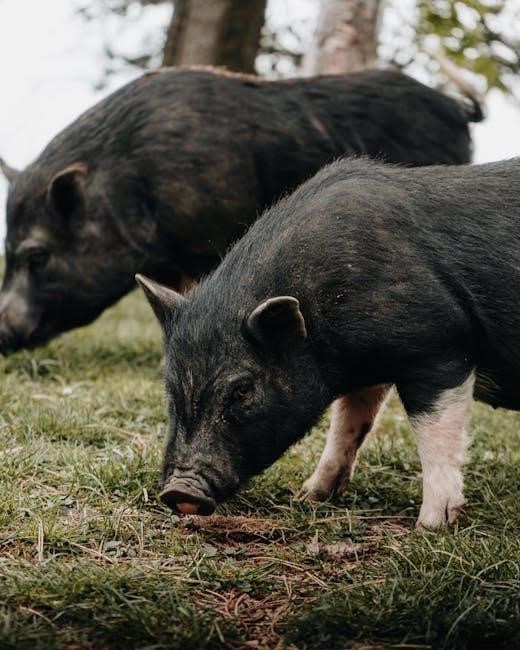
Storynory offers a free PDF alongside an audio narration, enhancing the storytelling experience. Another well-regarded source is the International Children’s Digital Library, providing access to classic folktales in multiple languages, including English PDFs.
Websites dedicated to printable children’s stories, such as Activity Village and Super Simple, also host free PDF versions. These often include accompanying coloring pages and activities. Amazon Kindle also offers various illustrated editions available for download in PDF format, some with interactive elements.
Remember to check licensing and usage rights before distributing any downloaded PDF files.
Adapting the Story for Different Age Groups
Adapting “The Three Little Pigs” for various age groups enhances comprehension and engagement. For toddlers and preschoolers, simplified PDF versions with minimal text and large, colorful illustrations are ideal, focusing on basic concepts like building and safety.
Early elementary students benefit from PDFs featuring slightly more complex sentences and detailed pictures, encouraging independent reading. These versions can also introduce basic sequencing skills.
Older children can explore PDFs that delve into the story’s themes of responsibility and perseverance, prompting discussions about problem-solving. Interactive PDFs with quizzes or comprehension questions further reinforce learning.
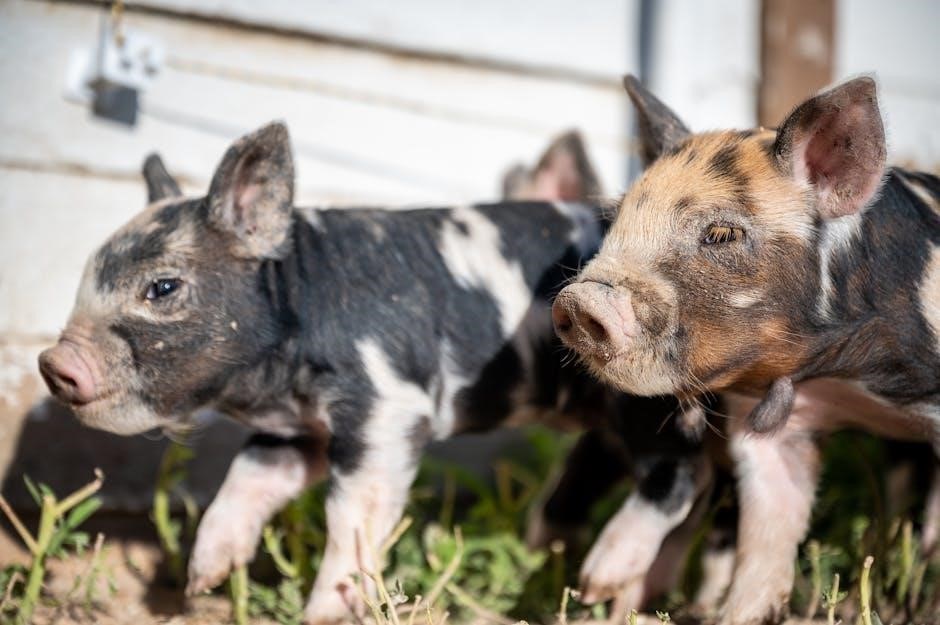
Consider versions that include variations of the tale, showcasing how the story evolves across cultures, enriching their understanding of storytelling traditions.
Interactive and Animated Versions
Beyond static PDFs, numerous interactive and animated versions of “The Three Little Pigs” captivate young audiences. These digital adaptations often feature engaging sound effects, lively character voices, and playful animations, bringing the story to life.
Interactive PDFs may include clickable elements, allowing children to participate in the narrative – for example, helping the pigs gather building materials or blowing down the straw house alongside the wolf.
Animated versions, available on platforms like YouTube and educational websites, offer a visually stimulating experience. Some incorporate games or quizzes to assess comprehension and reinforce learning.
These dynamic formats are particularly beneficial for visual and auditory learners, enhancing their engagement and retention of the story’s moral lessons. Digital storybooks often provide a more immersive experience than traditional PDFs.
Printable Coloring Pages and Activities
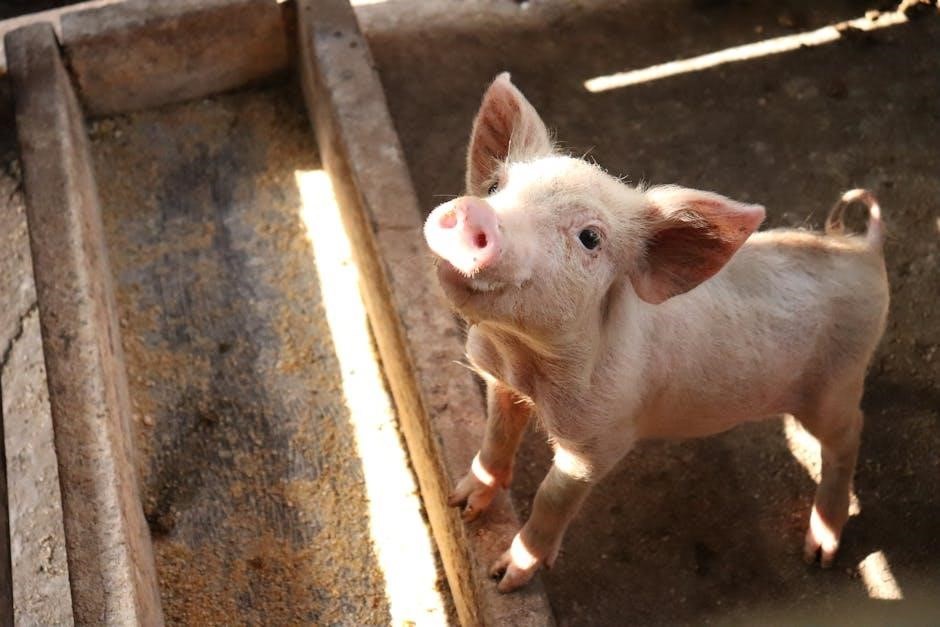
Complementing the storybooks, a wealth of printable coloring pages and activities related to “The Three Little Pigs” are readily available online, often accompanying PDF versions of the tale. These resources extend the learning experience beyond reading, fostering creativity and reinforcing key story elements.
Coloring pages depict iconic scenes – the pigs building their houses, the wolf huffing and puffing, and the triumphant brick house – allowing children to express their artistic skills while revisiting the narrative.
Activities include mazes, word searches, and connect-the-dots puzzles centered around the characters and plot. Some PDFs offer simple craft ideas, like building miniature houses from construction paper or creating pig masks.
These printable materials are ideal for classroom settings or at-home learning, providing a fun and engaging way to reinforce comprehension, develop fine motor skills, and encourage imaginative play. Parents and teachers can easily download and print these resources.
The Story’s Continued Relevance in Modern Times
Despite being a centuries-old folktale, “The Three Little Pigs” maintains remarkable relevance in modern times, continuing to captivate young audiences through readily available PDF storybooks with pictures. Its enduring appeal lies in its simple yet powerful message about the importance of hard work, planning, and resilience.
The story serves as an accessible introduction to concepts like cause and effect, problem-solving, and the consequences of choices. The contrasting approaches of the three pigs offer valuable lessons about diligence versus procrastination.
Modern adaptations often emphasize themes of safety and preparedness, subtly reinforcing the value of building strong foundations – both literally and figuratively. PDF versions frequently include discussion prompts to encourage critical thinking.
Furthermore, the story’s universal themes resonate across cultures, making it a valuable tool for promoting moral and social-emotional learning. The availability of illustrated PDFs ensures its continued accessibility for generations to come, preserving a timeless tale.