manual handling t.i.l.e

Manual handling significantly contributes to workplace musculoskeletal disorders (MSDs)‚ impacting a substantial portion of non-fatal injuries – often around one-third nationally.
The T.I.L.E. framework offers a structured approach to assess and mitigate risks associated with manual material handling (MMH)‚ crucial for worker safety.
With an aging workforce‚ understanding and addressing MMH risks becomes even more vital‚ as older workers may be more susceptible to injuries.
Defining Manual Handling
Manual handling encompasses any transporting or supporting of a load by hand or bodily force‚ unaided by mechanical devices. This includes lifting‚ lowering‚ pushing‚ pulling‚ carrying‚ and even holding objects. It’s a pervasive activity across numerous industries‚ contributing significantly to workplace injuries.
Specifically‚ manual material handling (MMH) work is linked to over half a million musculoskeletal disorder (MSD) cases annually in the United States. Recognizing this broad definition is the first step in effective risk management‚ as seemingly minor tasks can accumulate into significant health concerns for workers.
The Significance of T.I.L.E. in Risk Management
The T.I.L.E. assessment framework – encompassing Task‚ Individual‚ Load‚ and Environment – provides a systematic method for identifying and controlling manual handling risks. It moves beyond simply recognizing hazards to a comprehensive evaluation of all contributing factors.
By analyzing each element‚ organizations can proactively implement targeted interventions‚ reducing the prevalence of musculoskeletal disorders (MSDs). This structured approach is crucial‚ given that manual handling accounts for a substantial portion of workplace injuries and associated costs.
Prevalence of Musculoskeletal Disorders (MSDs)
Musculoskeletal disorders (MSDs) represent a significant occupational health concern‚ with manual material handling (MMH) work contributing to over half a million reported cases annually in the United States. These disorders‚ including cumulative trauma‚ are a leading cause of workplace disability.
Manual handling is frequently cited as the greatest contributor to non-fatal workplace injuries and disease‚ often accounting for approximately one-third of all national injury counts‚ highlighting the urgent need for effective risk management strategies.

Understanding the Risks of Manual Handling
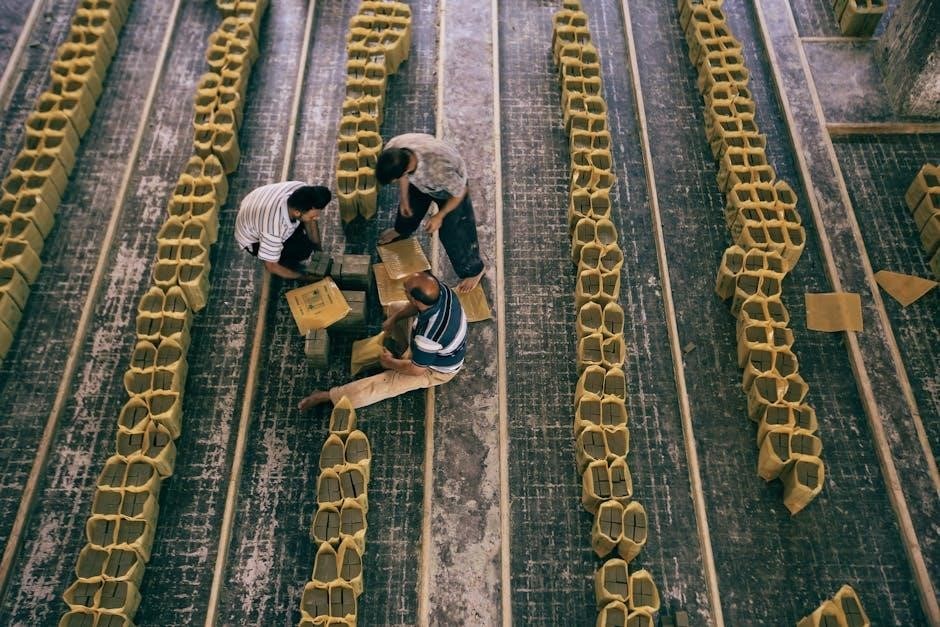
Manual handling tasks‚ like lifting crates‚ cause hundreds of thousands of injuries yearly. MSDs stem from repetitive motions and non-neutral postures.
Addressing these risks is vital for preventing cumulative trauma and ensuring a safe working environment for all employees.
Common Injuries Associated with Manual Handling
Manual handling frequently leads to work-related musculoskeletal disorders (WMSDs)‚ also known as cumulative trauma disorders (CTDs). These injuries arise from repetitive‚ load-bearing tasks and are a significant contributor to workplace ailments.
Specifically‚ injuries often manifest as strains‚ sprains‚ and more serious conditions affecting the back‚ neck‚ shoulders‚ and upper limbs. Incorrect postures during work directly overload joint structures‚ increasing injury risk.
The prevalence of these injuries underscores the need for proactive risk management and ergonomic interventions to protect worker health and well-being.
Factors Contributing to MSDs
Several key factors contribute to musculoskeletal disorders (MSDs) stemming from manual handling. Repetitive movements and forceful exertions place cumulative stress on the body‚ leading to injury over time.
Non-neutral postures‚ where joints are awkwardly positioned‚ induce overloading of structures. Additionally‚ the weight‚ size‚ and stability of loads significantly impact risk levels.
Environmental factors‚ such as poor workplace layout and inadequate lighting‚ further exacerbate these issues‚ creating a hazardous work environment for employees.
The Impact of an Aging Workforce
The composition of the workforce is shifting‚ with a notable increase in older employees – those over 45 have doubled since 1950‚ and projections indicate a 96% growth in workers 75+ by 2030.
This demographic shift presents unique challenges regarding manual handling risks‚ as age-related physiological changes can increase susceptibility to MSDs.
Older workers may experience reduced physical capabilities and increased vulnerability to pre-existing conditions‚ necessitating tailored risk management strategies and ergonomic interventions.
The T.I.L.E. Assessment Framework
T.I.L.E. – encompassing Task‚ Individual‚ Load‚ and Environmental factors – provides a systematic method for evaluating manual handling risks.
This framework aids in identifying hazards and implementing effective control measures to prevent MSDs.
Task Analysis
Task analysis‚ a core component of the T.I.L.E. framework‚ involves a detailed examination of the work being performed. This includes identifying repetitive movements‚ which can lead to cumulative trauma and WMSDs.
Evaluating posture during manual handling is crucial‚ as non-neutral positions induce joint overloading. Analyzing forceful exertions is also key‚ as these significantly contribute to injury risk.
Understanding the frequency‚ duration‚ and recovery time associated with each task helps pinpoint potential hazards. A thorough task analysis forms the foundation for effective risk mitigation strategies.
Individual Capabilities
Assessing individual capabilities within the T.I.L.E. framework is vital for safe manual handling practices. This involves evaluating physical strength and endurance‚ determining if workers can comfortably perform required tasks.
Crucially‚ identifying pre-existing conditions and individual vulnerabilities is essential. An aging workforce may have reduced physical capacity‚ increasing susceptibility to MSDs.
Considering factors like fitness levels‚ previous injuries‚ and any health limitations ensures tasks are appropriately matched to worker abilities‚ minimizing risk.
Load Characteristics
Analyzing load characteristics is a core component of the T.I.L.E. assessment. Determining the weight and size of loads is fundamental‚ alongside evaluating their shape and how easily they can be gripped.
Load stability and identifying the center of gravity are critical for safe lifting and carrying. Unstable loads pose a significant risk of drops and injuries.
Understanding these factors allows for informed decisions about handling methods and potential mechanical aids to reduce strain and prevent MSDs.
Environmental Factors
Environmental factors significantly influence manual handling risks within the T.I.L.E. framework. Assessing the workplace layout and identifying any space constraints is crucial for safe movement of loads.
Floor surfaces and available traction directly impact stability during lifting and carrying‚ while adequate lighting and visibility are essential to prevent trips‚ slips‚ and misjudgments.
Optimizing these elements minimizes strain and contributes to a safer working environment‚ reducing the likelihood of MSDs.

Detailed Examination of Task Factors
Task factors‚ like repetitive movements and forceful exertions‚ contribute to cumulative trauma and MSDs. Incorrect posture also overloads joints‚ increasing injury risk.
Repetitive Movements and Cumulative Trauma
Repetitive movements in manual handling tasks are a primary driver of cumulative trauma disorders (CTDs)‚ also known as work-related musculoskeletal disorders (WMSDs). These injuries develop gradually over time due to repeated strain on muscles‚ tendons‚ and nerves.
The constant repetition‚ even with relatively light loads‚ can lead to micro-damage that accumulates‚ eventually resulting in pain‚ inflammation‚ and functional limitations. Identifying and minimizing these repetitive actions is crucial for preventing long-term health issues among workers engaged in MMH.
Posture and Joint Overloading
Manual handling tasks performed with non-neutral postures significantly increase the risk of joint overloading and subsequent injury. Incorrect bending‚ twisting‚ or reaching places excessive stress on spinal structures‚ shoulders‚ and other joints.
Adopting awkward positions during lifting or carrying amplifies the forces acting on these areas‚ potentially leading to acute injuries or chronic conditions. Maintaining proper body mechanics and minimizing postural stress are essential components of a safe MMH program.
Forceful Exertions
Forceful exertions during manual handling are a primary contributor to musculoskeletal disorders (MSDs). Lifting heavy loads‚ pushing‚ pulling‚ or applying significant force repeatedly strains muscles‚ tendons‚ and ligaments.
These exertions‚ especially when combined with awkward postures or repetitive movements‚ can quickly overwhelm the body’s capacity‚ resulting in injuries like sprains‚ strains‚ and cumulative trauma disorders. Minimizing exertion levels through mechanical aids and proper technique is crucial.

Assessing Individual Capabilities
Individual capabilities‚ including physical strength and endurance‚ are vital considerations in manual handling risk assessments‚ alongside any pre-existing conditions.
Evaluating these factors helps determine a worker’s ability to safely perform tasks.
Physical Strength and Endurance
Physical strength and endurance are fundamental components when evaluating a worker’s capacity for manual handling tasks; these directly influence their ability to safely lift‚ carry‚ and maneuver loads.
Insufficient strength can lead to improper form‚ increasing the risk of strain and injury‚ while limited endurance contributes to fatigue‚ diminishing control and elevating risk over time.
Assessments should consider both static strength – the ability to exert force without movement – and dynamic strength – force applied during motion.
Furthermore‚ endurance testing helps gauge a worker’s sustained physical capacity.
Pre-existing Conditions and Vulnerabilities
Pre-existing conditions significantly heighten the risk of musculoskeletal disorders (MSDs) during manual handling; individuals with prior injuries or chronic conditions are demonstrably more vulnerable.
Conditions like arthritis‚ previous back pain‚ or carpal tunnel syndrome can reduce tolerance to physical stress‚ making even routine tasks potentially harmful.
A thorough assessment must identify these vulnerabilities‚ considering medical history and current health status.
Modifications to tasks or work environments may be necessary to accommodate these limitations.
Analyzing Load Characteristics
Load weight‚ size‚ shape‚ and stability are critical factors in manual handling risk assessment; proper grip and center of gravity analysis are essential.
Weight and Size of Loads
Load weight is a primary determinant of manual handling risk‚ directly impacting the physical strain on workers; heavier loads exponentially increase injury potential.
Alongside weight‚ load size and dimensions significantly influence handling difficulty‚ affecting posture and reach requirements.
Bulky or awkwardly sized loads can disrupt balance and necessitate uncomfortable body positions‚ predisposing individuals to musculoskeletal disorders (MSDs).
Assessing both weight and size is crucial for determining appropriate mechanical aids or implementing engineering controls to minimize worker exposure to hazardous conditions.
Shape and Grip Considerations
Load shape profoundly impacts the ease and safety of handling; irregular shapes often lack secure gripping points‚ increasing the risk of drops and strains.
Poor grip compromises control‚ forcing workers to exert excessive force and adopt awkward postures to maintain stability during lifting and carrying.
Handles‚ when present‚ should be appropriately sized and positioned to facilitate a firm‚ comfortable‚ and neutral wrist position‚ minimizing cumulative trauma.
Evaluating shape and grip is essential for identifying loads requiring mechanical assistance or redesign to improve handling ergonomics and reduce MSD risk.
Load Stability and Center of Gravity
Load stability is paramount; unstable loads shift during movement‚ demanding increased physical effort to control and significantly elevating the risk of drops and injuries.
The center of gravity dictates balance; loads with a high or offset center of gravity require greater exertion and increase the likelihood of losing control during manual handling.
Understanding these factors informs safe stacking practices and the selection of appropriate handling equipment‚ minimizing strain and promoting a neutral posture.
Assessing stability and the center of gravity is crucial for preventing musculoskeletal disorders (MSDs) and ensuring worker safety during lifting and carrying tasks.
Evaluating Environmental Factors
Workplace layout‚ floor surfaces‚ and lighting significantly impact manual handling safety; poor conditions increase risks of slips‚ trips‚ and strains.
Adequate space‚ good traction‚ and visibility are essential for minimizing exertion and preventing musculoskeletal disorders (MSDs) during material movement.
Workplace Layout and Space Constraints
Workplace layout profoundly influences manual handling risks; cramped spaces force awkward postures and increase exertion‚ directly contributing to musculoskeletal disorders (MSDs).
Insufficient space restricts efficient movement‚ compelling workers to twist‚ reach‚ or bend excessively while lifting or carrying loads‚ escalating injury potential.
Obstructions and poorly designed pathways necessitate additional steps or maneuvering‚ amplifying physical strain and fatigue over time. Optimizing layout minimizes these hazards.
Careful consideration of workflow‚ load placement‚ and access routes is crucial for creating a safer manual handling environment‚ reducing the likelihood of incidents.
Floor Surfaces and Traction
Floor surfaces significantly impact manual handling safety; slippery or uneven floors increase the risk of slips‚ trips‚ and falls while carrying loads‚ leading to injuries.
Insufficient traction demands greater muscular effort to maintain balance and control‚ exacerbating strain on the body during lifting and movement tasks.
Appropriate flooring materials and regular maintenance are essential for providing a secure footing and minimizing the potential for accidents during MMH activities.
Addressing floor hazards is a fundamental aspect of creating a safe working environment and preventing musculoskeletal disorders (MSDs) related to manual handling.
Lighting and Visibility
Adequate lighting is crucial for safe manual handling‚ ensuring workers can clearly see potential hazards like obstacles‚ uneven surfaces‚ and load characteristics.
Poor visibility increases the risk of misjudging distances‚ stumbling‚ and incorrect lifting techniques‚ contributing to strains and other musculoskeletal disorders (MSDs).
Sufficient illumination reduces eye strain and improves depth perception‚ allowing for more controlled and precise movements during MMH tasks.
Regularly assess and maintain appropriate lighting levels to create a safer and more ergonomic working environment for all personnel involved in manual handling.

Implementing Control Measures
Engineering controls‚ like mechanical aids‚ alongside administrative controls – such as job rotation – and appropriate PPE‚ minimize manual handling risks.
Prioritizing these measures reduces strain and prevents musculoskeletal disorders (MSDs)‚ fostering a safer work environment for all employees.
Engineering Controls (e.g.‚ Mechanical Aids)
Engineering controls represent the most effective strategy for minimizing manual handling risks‚ fundamentally altering the work environment to reduce physical demands.
Implementing mechanical aids – such as forklifts‚ pallet jacks‚ conveyors‚ and lift assists – directly reduces the need for workers to lift‚ carry‚ or maneuver heavy loads.
These tools shift the burden from the individual to the machine‚ significantly decreasing the potential for musculoskeletal disorders (MSDs) and cumulative trauma.
Properly designed workstations‚ adjustable platforms‚ and optimized layouts also fall under engineering controls‚ promoting neutral postures and reducing strain during tasks.
Investing in these solutions demonstrates a commitment to worker safety and long-term health‚ ultimately lowering injury rates and associated costs.
Administrative Controls (e.g.‚ Job Rotation)
Administrative controls focus on modifying work practices to lessen manual handling demands‚ complementing – but not replacing – engineering solutions.
Job rotation is a key strategy‚ distributing physically demanding tasks among multiple workers to reduce repetitive strain and cumulative trauma exposure for individuals.
Implementing regular breaks allows for muscle recovery and reduces fatigue‚ minimizing the risk of musculoskeletal disorders (MSDs).
Work-rest schedules‚ adjusted workloads‚ and clear standard operating procedures also fall under this category‚ promoting safer work habits.
Effective training and education empower workers to recognize risks and utilize safe techniques‚ enhancing the overall safety culture.
Personal Protective Equipment (PPE)
Personal Protective Equipment (PPE) plays a supporting role in manual handling risk management‚ but shouldn’t be the primary control measure.
While not directly eliminating hazards‚ appropriate PPE can mitigate injury severity; examples include supportive gloves to improve grip and reduce hand strain.
Back supports are sometimes used‚ though their effectiveness is debated – they may offer limited protection and potentially mask fatigue.
Proper footwear with good traction is crucial for maintaining stability during lifting and carrying‚ preventing slips and falls.
PPE should always be used in conjunction with engineering and administrative controls for comprehensive protection against MSDs.

The Historical Context of Manual Handling Practices
The Industrial Revolution introduced the division of labor‚ significantly altering work organization and analysis‚ often prioritizing speed over worker wellbeing in manual handling.
Early practices lacked ergonomic considerations‚ contributing to increased musculoskeletal disorders (MSDs) and cumulative trauma;
The Impact of the Industrial Revolution
The Industrial Revolution dramatically reshaped work‚ introducing the philosophy of the division of labor and widespread mechanization‚ yet often neglecting worker safety in manual handling tasks.
This shift prioritized production speed and efficiency‚ leading to repetitive‚ physically demanding jobs with little regard for ergonomic principles or the prevention of musculoskeletal disorders (MSDs).
Workers frequently performed strenuous manual material handling (MMH) without mechanical assistance‚ increasing the risk of cumulative trauma and injuries.
The focus on output overshadowed the importance of safe work practices‚ establishing a historical precedent for prioritizing productivity over worker wellbeing in manual handling operations.
Evolution of Ergonomic Principles
Following the Industrial Revolution’s shortcomings‚ a growing awareness of work-related injuries spurred the development of ergonomic principles‚ aiming to better fit work to the capabilities of the worker.
Early research highlighted the link between manual handling tasks‚ non-neutral postures‚ and joint overloading‚ leading to a focus on reducing physical strain and preventing musculoskeletal disorders (MSDs).
This evolution involved studying biomechanics‚ physiology‚ and psychology to design safer workplaces and tools for manual material handling (MMH).
The T.I.L.E. framework embodies this progression‚ offering a systematic approach to assess and control risks‚ prioritizing worker health and wellbeing.

Practical Steps for Risk Reduction
Workplace risk assessments‚ coupled with safe lifting techniques and comprehensive training programs‚ are essential for minimizing manual handling injury risks.
Implementing the T.I.L.E. framework aids in identifying and controlling hazards‚ promoting a safer work environment for all employees.
Workplace Risk Assessment Procedures
Effective risk assessment for manual handling begins with a thorough Task‚ Individual‚ Load‚ and Environment (T.I.L.E.) analysis.
This involves systematically evaluating each step of a task‚ considering worker capabilities‚ load characteristics‚ and environmental conditions.
Identify potential hazards like repetitive movements‚ awkward postures‚ and excessive force‚ then assess the level of risk associated with each.
Document findings‚ prioritize risks‚ and develop control measures – engineering‚ administrative‚ or PPE – to mitigate identified hazards.
Regularly review and update assessments to ensure continued effectiveness and adapt to changing work processes.
Safe Lifting Techniques
Employing proper lifting techniques is paramount in minimizing manual handling risks‚ directly addressing T.I.L.E. factors.
Maintain a straight back‚ bend your knees‚ and keep the load close to your body to reduce strain and leverage forces effectively.
Avoid twisting during lifts; instead‚ pivot your feet to change direction‚ protecting your spine from injury.
Assess the load’s weight and stability before lifting‚ seeking assistance if needed‚ and plan the lift path to avoid obstructions.
Proper technique‚ combined with T.I.L.E. assessment‚ significantly reduces the risk of musculoskeletal disorders (MSDs).
Training and Education Programs
Comprehensive training and education programs are essential for effective manual handling risk management‚ directly supporting the T.I.L.E. framework’s implementation.
These programs should cover proper lifting techniques‚ risk assessment procedures‚ and understanding of MSD prevention strategies.
Educate workers on recognizing T.I.L.E. factors – Task‚ Individual‚ Load‚ and Environment – and their impact on injury risk;
Regular refresher courses reinforce safe practices and address evolving workplace conditions‚ ensuring sustained safety improvements.
Investing in training empowers employees to proactively identify and mitigate manual handling hazards.